
It feels slightly surreal to be writing this. After eight years as the Wales member of the Social Security Advisory Committee (SSAC), I’m stepping away. That’s long enough for the role to stop being “new” and start feeling like part of your professional DNA long enough, too, to see the system shift, stumble, adapt and, occasionally, genuinely improve.
So, this is a bit of a reflection. Not a formal report, SSAC does plenty of those but a more personal view of what’s changed in the welfare landscape since I started, what SSAC has managed to influence (often quietly), and what I think still lies ahead.
Starting from (not even) Scratch
I should probably begin with how all this started because it still raises a smile.
Over eight years ago, I received an email from the then Chair of SSAC - the subject line was simply “DWP”. My immediate reaction, if I’m honest, was not excitement or curiosity more gentle panic. I assumed I’d done something wrong. Unpaid taxes, perhaps? Some long-forgotten administrative failure finally catching up with me?
That wasn’t the case.
The email was an invitation to consider applying for a vacancy as SSAC member. My response was, in hindsight, entirely predictable. I politely suggested that, given my complete lack of knowledge of social security and, in particular, its secondary legislation, the Committee might want to look elsewhere.
Two conversations later, I was persuaded - if that’s the right word - to apply. I used that application as another opportunity to explain why I was wholly unsuited to the role. The hope was that this would finally bring the whole episode to a close.
It didn’t.
A few days later I received an invitation to interview. At this point, I began to suspect they weren’t getting the message. So, I decided to make it crystal clear in person. I went to Caxton House fully intending to plead my case for rejection.
The interview went about as you might expect. I was asked and failed to answer numerous questions on obscure corners of welfare legislation and practice. But in a moment of either honesty and clarity, I did say something along the lines of: if you wanted an expert, then I wasn’t it. But if they wanted someone with a bit of life experience and a sense of duty to the success of the nation, then…
I left the building with a spring in my step, convinced I’d succeeded in ruling myself out. Shortly afterwards, a letter arrived offering me the role, with a contract attached.
That’s when I realised what was actually required for the role.
A Different Kind of Contribution
It became clear fairly quickly that I hadn’t been appointed despite my lack of technical expertise but, in part, because of it. Up to this point, I had enjoyed a life of service to our nation, first through my 26 years in the Armed Forces, including on operational deployments all over the world. More recently I had led charities including being then then Director of The Prince's Trust in Wales. Within a committee of many brilliant technical experts, it was vital that SSAC's membership also included people like me with a more generalist approach, with a network across business and other sectors and equipped with the rich and varied life experience that I had enjoyed for many years.
Eight years on, my knowledge of the finer points of social security legislation may still provide relatively slim pickings. But that was never really the point.
SSAC already has people who understand the intricacies of statutory instruments, regulatory frameworks, and policy architecture in extraordinary detail - and I’ll come back to them shortly. My role has been something different: to stand slightly outside that detail and ask the more fundamental questions.
Why this policy?
What problem is it trying to solve?
What does good look like?
How will this policy be understood?
It’s seldom been the most sophisticated contribution in the room, but hopefully one that complemented others. Because in a system as complex as social security, it’s surprisingly easy to lose sight of the original motivation behind the policy.
The Company You Keep
One of the most striking things about SSAC, something that has never really diminished over time, is the sheer weight of intellect and expertise around the table.
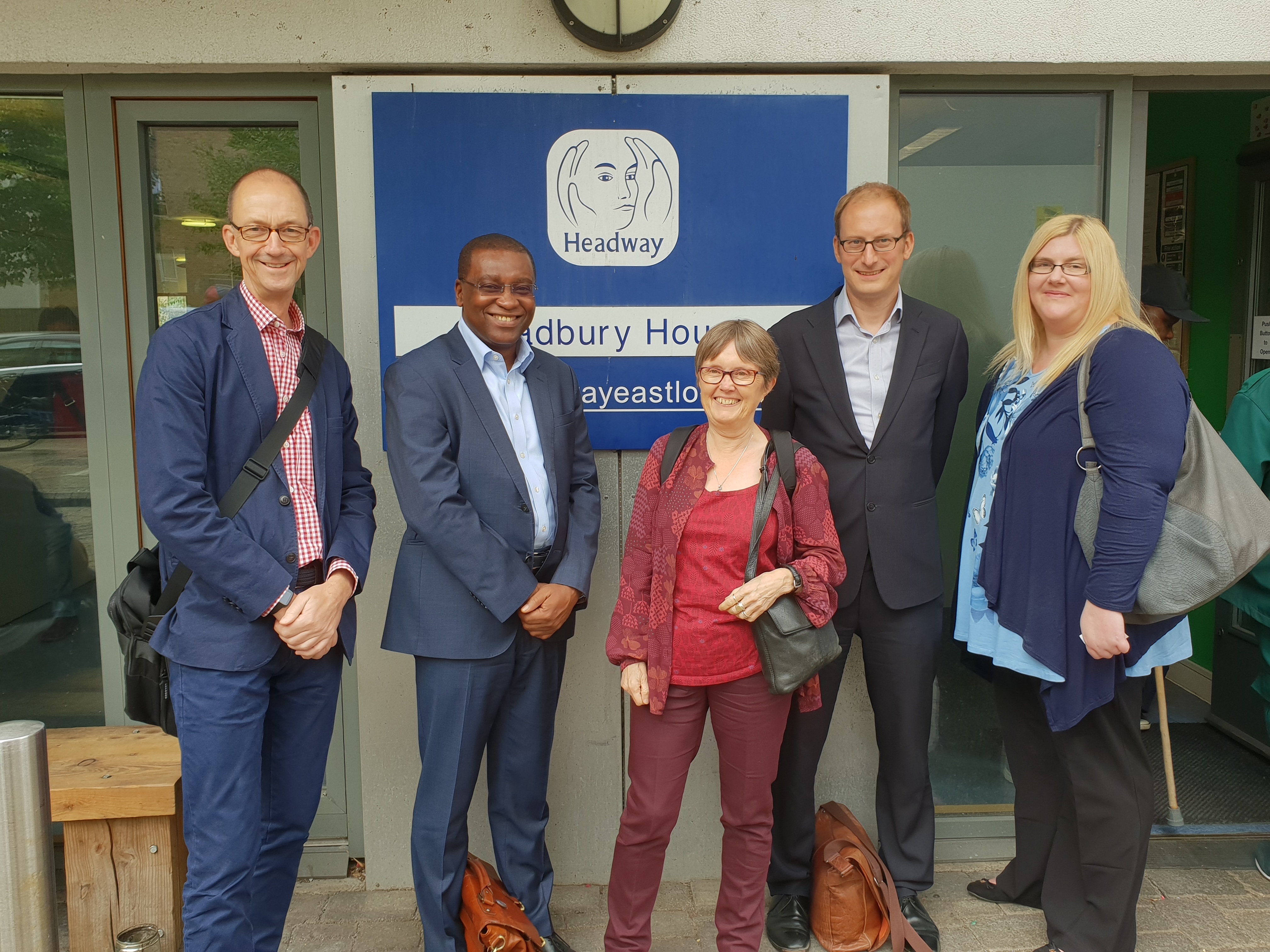
This is a Committee of people who really know their subject. Deep, often highly specialised knowledge of welfare policy, law, economics, labour markets, you name it. At times, it can be faintly intimidating.
But what makes it work is how that expertise is used. There’s a genuine openness to challenge, a willingness to test assumptions, and a shared commitment to getting things right.
And alongside the Committee members, there is the administrative and secretariat team without whom none of this would function as effectively as it does.
They are, quite simply, excellent. They ensure the Committee’s work is thorough, organised, and grounded in evidence. They manage engagement with stakeholders across the UK, maintain strong working relationships within the Department, and ensure that everything we do stands up to scrutiny.
Just as importantly, they operate with a constant focus on value for money and accountability. The outputs might look polished - and they are - but that’s underpinned by a great deal of careful, disciplined work behind the scenes.
If SSAC has a reputation for rigour and credibility, a large part of that sits with them.
The View from Eight Years In
When I joined, Universal Credit was still rolling out something between an ambition and a live experiment, depending on your perspective.
Eight years later, it is firmly established as the backbone of working-age benefits. The questions have shifted accordingly. We’re no longer asking whether it will work, but how it can be improved.
Alongside that, we’ve seen continued reform of disability benefits, the system’s response to COVID-19, and the growing impact of cost-of-living pressures. Provisions and protections that pertain to refugees and asylum seekers have also risen up the agenda. From a Welsh perspective, the gradual development of devolved responsibilities has added another layer to the landscape.
In short, it hasn’t stood still.
Where We’ve Made a Difference
SSAC’s role in all of this is often quiet but it is real.
We’ve contributed to improvements in Universal Credit, refinements to payment structures, greater flexibility, and better transitional support. None of this happens overnight, but over time the system has evolved in response to evidence and scrutiny.
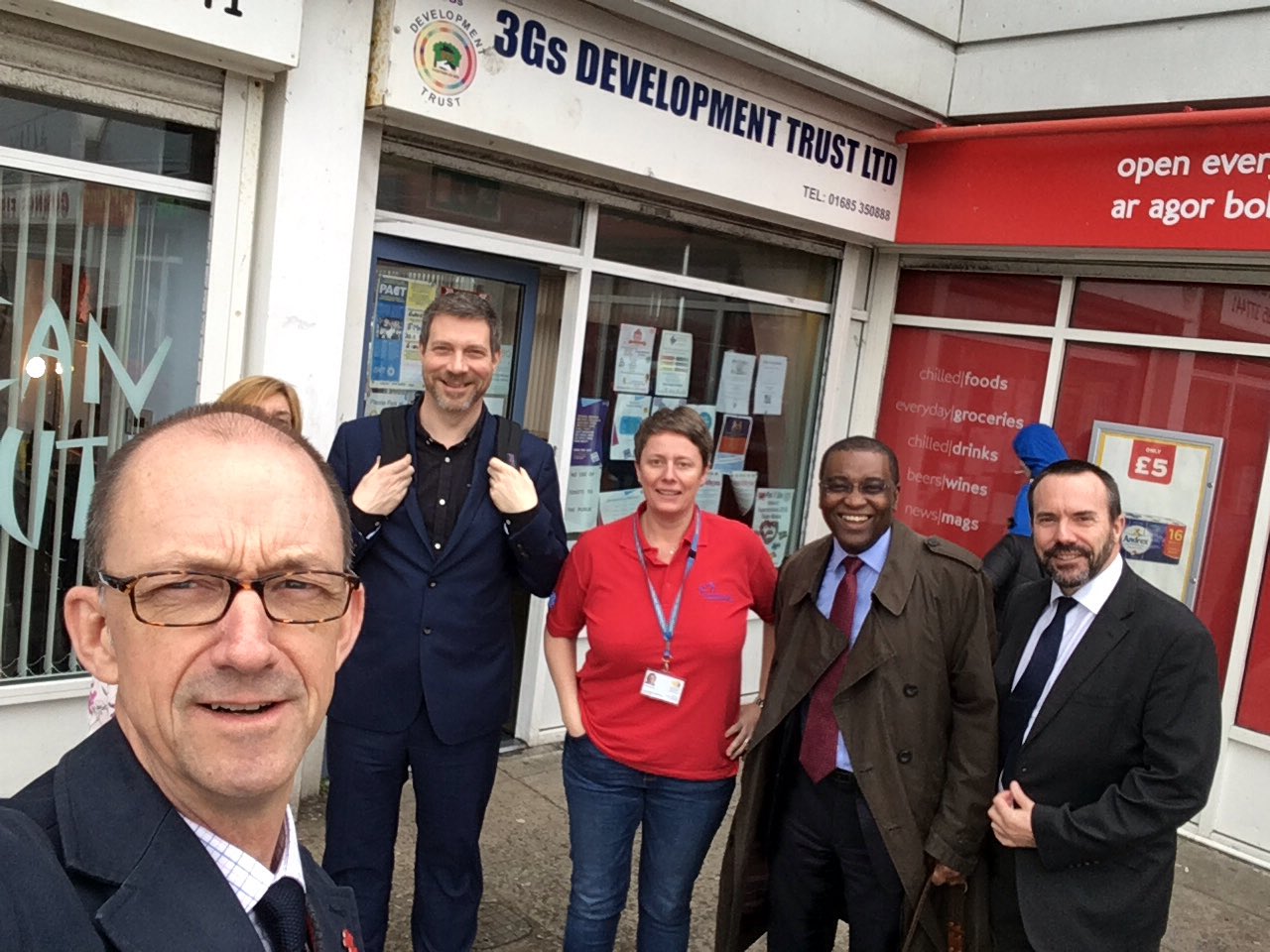
We’ve consistently emphasised the importance of lived experience, ensuring that policy is informed by those who actually use the system. In Wales, that has meant drawing heavily on strong networks of third sector organisations and advice services.
We’ve examined disability benefits closely, pushing for greater fairness, transparency, and dignity and considered the circumstances and motivations of young people. And during COVID, we played a role in reviewing rapid policy changes and highlighting the lessons that could be carried forward.
What Has Been Harder
Progress is rarely linear.
There are longstanding challenges in the system - complexity, adequacy of support, gaps for certain groups for example - that don’t lend themselves to easy solutions. And while SSAC can advise and recommend, it doesn’t make policy decisions.
There have also been times when the pace of reform has created risks in delivery. In those moments, the ability to step back and ask “are we sure?” or “this could be even better if….” has felt particularly important.
Looking Ahead
The system will continue to evolve and likely become more complex before it becomes simpler.
The interaction between UK-wide and devolved provision will be a key issue, particularly in Wales with a new Welsh Government already making noises about devolving welfare decisions to local decision-makers. Questions of adequacy will remain front and centre, especially in the context of ongoing economic pressures. And the shift to digital services will need to be carefully balanced with accessibility.
If there’s one thing that gives me confidence, it’s the increasing emphasis on evidence - both data and lived experience - as the basis for policy, which I know SSAC will continue to press-on.
A Personal Note
Looking back, it’s been an unexpected privilege, not because of the title, but because of the opportunity to contribute in a small way to something that matters.
Social security is, at its core, about people, their ability to navigate difficult periods with a degree of stability and dignity. The clue is in the title. However, I would add that at a time in our country where the notion of ambition and taking personal responsibility for one’s future is butting up against a rapidly changing employment landscape – it is also about balancing the pull and push factors of economic activity.
If I’ve added anything over the past eight years, I hope it’s been that slightly different perspective: the non-expert voice helping to ensure pluralism, asking why, challenging assumptions, and occasionally bringing things back to first principles.
And along the way, I’ve had the benefit of working with and learning from some exceptional people. The intellect, the commitment, and the collective sense of purpose has been something quite special.
Signing Off
Eight years on, I still find it slightly amusing that my best efforts to avoid appointment resulted in actually being appointed. After all, SSAC is still affectionately known in my family as “that Committee that Dad’s on that he knows nothing about”.
But I’m glad the recruitment panel didn’t take the hint and I was recommended to Ministers as a suitable appointee.
Because despite my early concerns and perhaps because of them, it’s been an experience that has taught me far more than I expected. About policy, certainly, but also about people and systems. In an echo of my previous experience serving on operations around the world in our Armed Forces, it’s also about the priceless value of asking simple questions in complex environments.
As I step away, SSAC is in excellent hands. The work will continue, the system will keep evolving, and the need for thoughtful, independent scrutiny will remain.
And if there’s one thing I’ve learned, it’s that progress is possible, even if it takes time.
Sometimes all it needs is persistence, evidence… and someone in the room still willing to ask, “why?”
Diolch yn fawr pawb.